Getting free cases in CS2 is something almost every player looks into sooner or later. Skins are a core part of the experience, and opening cases is tightly connected to the whole skin gaming scene. At the same time, not everyone wants to spend money immediately, especially when just getting started.
In both CS:GO and CS2, the idea of “free cases” exists, but it rarely means completely free with no conditions. Most of the time, access comes from bonuses, platform systems, or small rewards that are built into how skin gaming platforms operate.
Understanding how this works in practice is what actually makes the difference.
What Free Case Mean in CS2 and CS:GO
Free cases are usually part of a structured system rather than random giveaways. On platforms like CSGOFast, they are designed as entry points that allow users to try features without committing balance right away.
Instead of thinking about it as “free items,” it is more accurate to see it as limited access provided through different mechanics.
These mechanics are commonly tied to:
- Welcome bonuses
- Promo code activation
- Platform activity
- Limited-time events
The important part is that each of these sources behaves differently. Some are instant, while others depend on timing or usage.
How Free Case Work on CSGOFast
CSGOFast is built around a balance-based system where skins and value are used inside different modes. Free case fit into this system as an entry-level feature.
They are usually available in a few specific ways, and each one follows a slightly different logic.
1. Promo code activation
This is one of the simplest ways to access free case.
After logging in, users can activate a promo code “SKINBONUS” and receive:
- Free case
- 10$ Deposit Bonus
Promo codes are often the first interaction new users have with the platform.
2. Platform-based bonuses
Some free cases are distributed through internal systems.
These are not always visible immediately, but they can appear as:
- Account rewards
- Periodic drops
- Small balance additions
They are part of how platforms maintain activity rather than a one-time giveaway.
3. Event-based rewards
From time to time, platforms introduce events that include free cases.
These are usually tied to:
- Seasonal updates
- Activity milestones
- Short campaigns
Events are less predictable but can offer better rewards compared to standard bonuses.
Step by Step: Getting Your First Free Case
For someone new to CS:GO skin gaming or CS2 platforms, the process is simple when broken down clearly.
Step 1: Log in and set up your account

Start by signing in with Steam. After that:
- Add your trade link
- Check your profile settings
- Enable basic security
Even though this step looks simple, it matters later when items are involved.
Step 2: Activate available bonuses
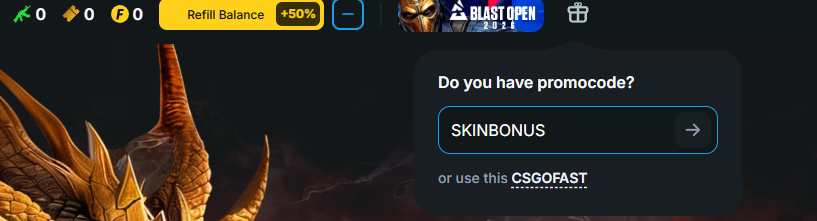
Before doing anything else, check if there are promo codes or bonuses available.
This step is often overlooked, but it is the easiest way to unlock free cases without effort.
Step 3: Access and open a free case
Once a case becomes available, it can be opened immediately.
The result will be a random skin, based on predefined drop rates.
Step 4: Decide how to use the result
After opening a case, there are several possible actions.
- Keep the skin in inventory
- Use it again within the platform
- Withdraw it through a trade
Each option depends on the situation and available balance.
Free Case vs Paid Case
To understand the system better, it helps to compare free cases with regular ones.
| Feature | Free Case | Paid Case |
| Cost | No direct cost | Requires balance |
| Access | Limited or conditional | Always available |
| Rewards | Lower average value | Wider range |
| Purpose | Entry and testing | Full experience |
| Frequency | Occasional | постоянный доступ |
Free cases are designed as an introduction. Paid cases represent the full version of the experience.
What Affects Results in Case Opening
One of the most common misunderstandings is expecting consistent results from free cases.
In reality, outcomes depend on a few key factors:
- Probability and drop rates
- Case structure
- Randomness
Even in CS:GO, where the system has existed for years, results can vary significantly from one opening to another.
Short sessions can feel very uneven, especially when expectations are not aligned with how probability works.
Common Mistakes When Trying to Get Free Cases
Even though the idea sounds simple, there are a few patterns that lead to confusion.
Expecting high-value skins
Free cases are usually designed with lower average value. High-tier items are possible but rare.
Ignoring how bonuses work
Some rewards come with conditions. Not understanding those conditions often leads to frustration later.
Using everything too quickly
Many users activate all bonuses at once and use them immediately. This removes the chance to understand how the system behaves over time.
Practical Tips for Better Use
There is no guaranteed way to get better outcomes, but there are ways to approach the process more effectively.
Simple approach
- Start with promo codes
- Check for active rewards regularly
- Open cases gradually
- Pay attention to drop rates
These steps help build a more realistic understanding of the system.
Why Free Cases Exist in Skin Gaming
Free cases are not just giveaways. They are part of how skin gaming platforms introduce users to their systems.
In both CS:GO and CS2 environments, platforms use free access to:
- Show how case opening works
- Allow users to test features
- Create initial engagement
This is why completely unlimited free cases do not exist. The system is structured to balance access and sustainability.
Final Thoughts
Getting free cases in CS2 or CS:GO is not about finding a hidden trick. It is about understanding how platforms structure access through bonuses, promo codes, and events.
CSGOFast provides several entry points that allow users to try case opening without immediate spending. These systems are designed as a starting layer, not the full experience.
Once expectations are realistic, everything becomes clearer. Free cases stop being seen as a shortcut and start making sense as part of a larger system built around skins, probability, and user activity.

I write about CS2 skin gambling , focusing on how things actually work rather than how they are marketed. Most of what I cover comes down to game mechanics, risk, and the small details that people usually overlook when getting started.